Petroleum Snowball
Australia remains exposed to global supply shocks while simultaneously trying to rebuild sovereign industrial capability. You might spare a thought for the millions of small and medium sized business owners in Australia who have been trying to keep afloat and in profit since the Gulf crisis began six months ago. It turns out that our…
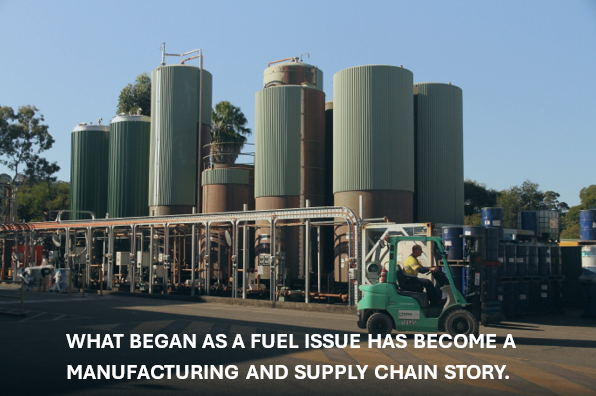
Australia remains exposed to global supply shocks while simultaneously trying to rebuild sovereign industrial capability.
You might spare a thought for the millions of small and medium sized business owners in Australia who have been trying to keep afloat and in profit since the Gulf crisis began six months ago.
It turns out that our economy still runs on oil and not just in our fuel tanks. The oil industry is in everything, from plastics and packaging to ag-chemicals and the product my company makes, grease. Just about every item on a building site owes its existence to petroleum.
The chaos created by price spikes in oil is illustrated by the Qantas 2026 results and how they were affected by the Gulf crisis. The AFR reported, “Qantas said in April that its fuel bill could blow out by as much as $800 million as a result of a quintupling in jet fuel refining margins.”
Qantas’ business unit profits were all down on 2025 (except Loyalty). Given Qantas is one of the nation’s largest corporations, its vulnerability to petroleum price shocks provides a context for what the entire economy has been trying to absorb.
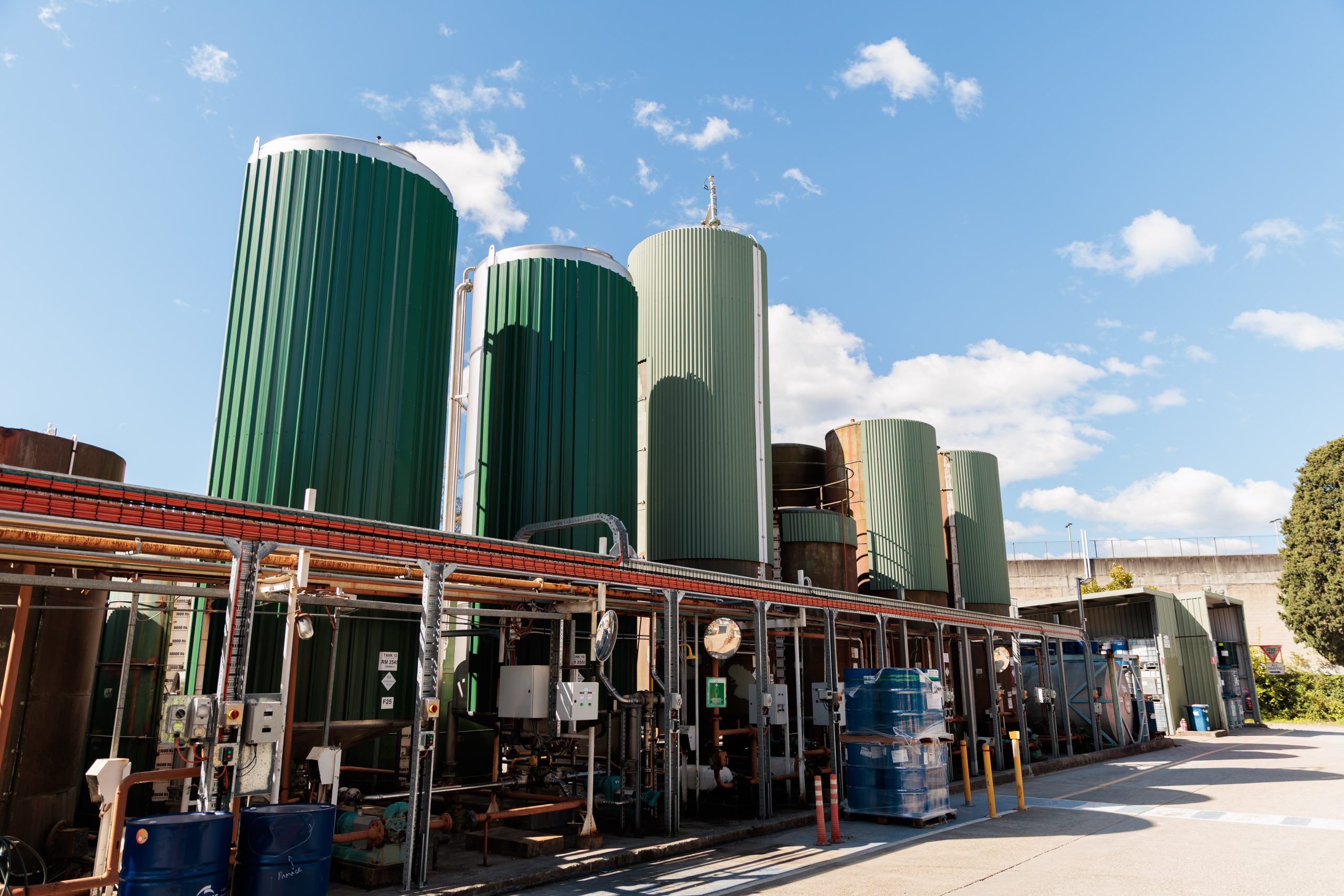
The increases in oil/fuel prices through a petroleum supply chain are handed on through every touch point. In my business – industrial lubricants and grease – we start with base oil and some of our products contain a further 124 inputs. The original margin blowout at the refinery expands like a balloon through the layers of manufacturing and lands as a messy mosaic of price rises. This is made more uncertain by supply constraints as every player tries to stockpile more inventory as a hedge against price volatility and tightening supply.
Sovereign
Which brings us to the topic that so many people in industry have been asking, even if not publicly: are the gains of closing down Australian heavy industry worth the losses?
In particular, if we shut down oil refining, chemical manufacturing, urea and fertiliser and steel – on the basis that another country can make it more cheaply – what do we have to give up?
I’ve lived this question, as a manufacturer, through COVID, Hormuz, freight disruptions, raw material shortages, energy volatility and workforce constraints. I’ve watched input price volatility bounce around and seen how quickly supply tightens when businesses feel vulnerable and decide to stockpile so they can at least deliver on orders.
The problem gripping our economy these last six months comes back to oil, its transport and its refining. We have two major oil refineries still operating, both heavily reliant on imported crude; domestic refiners supplies only a minority of national fuel demand and they supply roughly 15 – 20% of transport fuel demand. We have had six major refineries close since the early 2000s and now the remaining two are being propped up by the federal government’s Fuel Security Services Payment; the government has also put $15 billion on the table to incentivise the building of new liquid fuel infrastructure which might include a proposal to build a refinery at Karratha in WA and also seeks to boost storage and reserves.
Government policy is now trying to rebuild some resilience through fuel security, storage and infrastructure measures, but it looks like a patch-up response to a much larger sovereign capability problem.
We cannot keep saying we want sovereign capability while allowing every procurement decision to be guided by lowest landed cost.
So let me put this bluntly: we cannot keep saying we want sovereign capability while allowing every procurement decision to be guided by lowest landed cost. Resilience has a price. Economies do not necessarily thrive because every item is the ‘cheapest’.
Perhaps the most obvious point is that if you import everything because it’s ‘cheap’, how much control do you have over its price or delivery? Recent producer price data shows how quickly energy and freight shocks flowed through the economy during the Hormuz disruption. Manufacturing and transport costs were materially impacted by a 37.5% rise in fuel costs, which the ABS’s Producer Price Index referred to as, “Together, these factors contributed to the largest quarterly increase in Final demand since September 2023.”
Just to labour the point, the forces referred to by the ABS are all driven by an imported commodity and the cost/uncertainty of transporting it here.
So, the question as I see it is whether we want to pay a little more upfront or a lot more during the next crisis? What does ‘a lot more’ look like? Have another look at that ABS figure on the Producer Price Index for the June quarter: “The main contributors to quarterly growth in Final demand were: Petroleum refining and petroleum fuel manufacturing (+37.5%), due to increased oil prices driven by restricted oil flow through the Strait of Hormuz since the escalation of the conflict in the Middle East in late February 2026.”
That’s what the flipside of lowest-cost economics looks like: 37.5%, and we’re not even through the Gulf situation yet.
Building an economy on imports – even for resources we have in Australia, such as crude oil – is only good policy when the going is good. But the going isn’t always good and unevenness occurs when Australian manufacturers must navigate sanctions, and financing and compliance constraints, while some imported finished goods still arrive from supply chains that have benefited from low-cost sanctioned or discounted oil.
Even given all this, I still believe we need to look at where the next crisis could come from and prepare. From the perspective of an Australian manufacturer it boils down to controlling as many variables as possible, which includes workforce, government decision-making, cost of inputs and the supply and price of energy.
Where you can reduce risk and raise certainty, you’d probably do it. It’s time for this country to look at what is both important and can be made here, and prioritise those things as a sovereign capability.
Julie Harrison
CEO of Harrison Manufacturing Company